Team collaborating around a laptop

Creative services

Creative marketing services your sales team actually uses

Brand-consistent collateral that closes deals. Sales decks, trade show materials, one-sheets, templates, campaign assets.
Ongoing creative support from a team that already knows your brand, not one-off projects that start from scratch every time.

  • Connective google rating
  • Connective design rush rating
  • Connective yelp rating

Your brand looks different every time it shows up

Your sales team is building their own pitch decks in PowerPoint because they needed something yesterday and couldn’t wait two weeks for a freelancer to learn the brand. Marketing has a brochure from last year that doesn’t match the website from this year. The trade show is in three weeks and nobody has booth materials.

Every time you hire a freelancer, you spend half the project re-explaining who you are, what the brand looks like, and what the piece needs to accomplish. Then they disappear. The next project starts over.

The problem isn’t that you need a designer. It’s that you need a team that already knows.

Most companies land in an awkward gap. Too many creative needs for occasional freelancers. Not enough to justify a full-time hire. So materials get produced piecemeal by whoever’s available, and the brand drifts a little further from itself with each project.

The cost of that drift is hard to measure but easy to feel. Prospects get a polished website and then a sales deck that looks like it came from a different company. The conference booth tells one story. The follow-up materials tell another. Every inconsistency chips away at credibility you spent real money building.

Tell me more

How we think about creative work

Creative execution gets better when it’s connected to something deeper than a style guide. Every piece traces back to the same positioning, so your sales deck echoes your website, your booth echoes your sales deck, and prospects see the same company in every place they look. Because our team is often there for the positioning work, that context shows up in everything we produce.

  •  Integration icon

    Every piece has to earn its existence

    We don’t ask “does this look good?” We ask “what is this going to do to put money in our client’s pocket?” A sales deck isn’t a design project. It’s a closing tool. A trade show banner isn’t a branding exercise. It’s a conversation starter that needs to work from 30 feet away.

  • Business operations icon

    Framework-led or custom, chosen intentionally

    Some projects need proven structure: a one-sheet suite, a template system, a case study series. Others need original thinking: a pitch deck for a major deal, a trade show presence in a new market. We’re explicit about which approach we’re recommending and why, because that choice drives price and timeline.

  • Process management icon

    Brand knowledge compounds over time

    The first project takes the most hours because we’re learning. The second takes fewer. By the sixth, we can start without a two-hour briefing call. Every project gets more efficient because we’re not re-learning who you are, which is why the partnership math works.

  • System maintenance icon

    Tools your team can use without us

    Templates, presentation systems, document frameworks. We build tools your team can execute on the everyday stuff. Then we handle the work that needs senior creative thinking. You’re not dependent on us for every business card update, but you’re not winging it on the materials that matter.

Learn More About Our Approach

What we make

From sales enablement through event materials, with the brand consistency to make it all feel like one company.

What’s NOT included in creative services scope: Brand strategy and positioning (separate service), logo and identity design (separate service), website design and development (separate service), video production (separate service), ongoing marketing strategy or campaign management. If we think strategy work would make the creative output significantly stronger, we’ll mention it. But we won’t hold your project hostage to a branding engagement you didn’t ask for.
Sales enablement

Sales deck and pitch deck design with strategy, content structure, and presentation design for 20-30 slides. Proposal and SOW templates your team can customize per deal without breaking the brand. Case study design, written and designed for both print and digital. Sales messaging frameworks with talk tracks, email templates, and objection responses built from brand voice. A sales deck built on your actual positioning and buyer research closes differently than one your rep assembled from last quarter’s slides.

Brochures with content strategy and design, tri-fold or multi-page. One-sheets and sell sheets that distill complex offerings into scannable sales arguments. Direct mail from single pieces to coordinated multi-touch campaigns. Collateral packages that bundle brochures, one-sheets, and sell sheets into a cohesive suite. Annual reports with content strategy, layout, and print-ready production. Print advertising, single or multi-ad campaigns.

Brand collateral suites: business cards, letterhead, email signatures, and social templates. Presentation systems with branded PowerPoint or Google Slides masters and multiple layouts. Email templates with branded HTML layouts your marketing team can populate. Document templates for proposals, reports, and internal documents. Templates only matter if your team uses them, so we build systems that are easy to populate and hard to break.

Trade show packages including booth graphics, collateral, and signage. Trade show booth design for large-format environments. Event collateral packages with programs, signage, name badges, and banners. Vehicle wrap design for full or partial wraps. Environmental and wayfinding signage for offices and facilities.

Social media brand kits with profile images, cover photos, and post templates across platforms. Infographic design including research, content structure, and visual design. Digital ad creative packages with static and animated ads across standard sizes. Custom icon and illustration systems for brand-specific visual language.

Product packaging design from single SKU through cohesive multi-SKU systems. Label design for individual products, print-ready. Packaging that has to work on a shelf next to competitors gets different treatment than packaging shipped direct to a customer who already chose you, and we approach each accordingly. Structural decisions, material choices, and dieline production all happen in coordination with your manufacturer so what we design is what gets produced.

When creative services make sense

Honest guidance about which service fits your situation.

  • Creative support is the right fit

    You need professional materials across multiple touchpoints, and managing freelancers has become its own job. You want consistency without re-explaining the brand every time, and a team that learns your business as it goes. Continue exploring creative services

  •  
  • You might need branding first

    Materials look inconsistent and the root cause isn’t execution: the brand itself isn’t defined. No one agrees on messaging, the visual identity has drifted, and collateral built on that just creates rework. See branding services

  •  
  • You need a website, not collateral

    The biggest gap isn’t materials, it’s the website itself. If prospects visit your site and leave confused, better sales decks won’t fix that. Website first, then collateral that reinforces it. Explore website design

  •  
  • Not ready yet

    You’re mid-rebrand and the identity isn’t finalized, or you’re not sure which materials you actually need. Creative work built on an unfinished foundation creates expensive rework. Better to wait until the foundation is settled. Contact us for timing guidance

How creative work happens

Five phases. Same sequence every time. The scope adjusts based on what you need, but the order never changes. That consistency prevents the kind of mistakes that cost real money to fix.

Discover

We start by understanding the piece, the audience, and the goal. What does this need to accomplish? Who’s going to see it? What action should they take? For new clients, this includes reviewing brand guidelines and getting familiar with the visual system, messaging framework, and competitive context. For returning clients, this step gets shorter with each engagement.

Content strategy and creative direction before anyone opens a design file. For a sales deck, that means defining the narrative arc and content structure. For a trade show, it means understanding the environment, the audience flow, and what needs to communicate from 20 feet away versus 2 feet away. For a template system, it means mapping every use case your team will encounter.

This is where the framework-led versus custom decision gets made explicitly. We recommend the approach, explain the tradeoffs, and align on what to expect.

Design and production. Framework-led projects move fast because the structure is proven and decisions were front-loaded. Custom projects take more rounds because we’re discovering the right answer through the work itself. Either way, you see work in progress, not a big reveal three weeks later. Feedback happens in real time so small misalignments don’t snowball into major corrections.

Final files delivered in every format you need. Print-ready, screen-optimized, editable source files where appropriate. For template systems, we walk your team through how to use them. For sales materials, we make sure the people who’ll actually present them know how the deck flows and where to customize.

For ongoing partnerships, we track what’s working in the field. Which version of the one-sheet are reps sending? Is the trade show layout driving conversations or are people walking past? Did the updated case study shorten the sales cycle? We refine based on real usage data, not assumptions. Creative work compounds when you’re paying attention to how it performs.

How creative work compounds

Creative services stand alone when you need specific materials produced. But they become significantly more valuable when connected to strategy and brand foundation.

Strategy → Creative

When creative work is informed by brand strategy, every piece starts from the same positioning foundation. No guessing about messaging. No debating tone. The strategy answers those questions before design begins, which means fewer revisions and stronger output.

See brand strategy services

Creative → Sales

Materials built on buyer research and real sales conversations close differently. They anticipate the objections before the prospect raises them. They use language the buyer already uses in their own head. Your sales team reaches for these materials because they help move deals forward, not because someone told them to use the new collateral.

Explore our approach

Creative → Marketing

Campaign collateral, social assets, ad creative, event materials. When everything shares the same visual system and messaging foundation, every touchpoint reinforces the others. Consistency across channels is what separates brands that feel established from brands that feel scattered.

Marketing services

Creative work should make your business easier to run and push it forward. If a sales deck doesn’t help close deals, it failed. If a trade show presence doesn’t start conversations, it failed. We’re not here to make things that look great and sit in a folder, we’re here to make things that move the needle.”

— Rodney Warner, Founder & CEO

Where creative fits in the sequence

Creative services work best when the brand foundation is clear. If positioning is settled and there’s a defined visual system, creative is the right next move. If those decisions are still in flux or contested internally, brand strategy or guidelines should come first. Creative built on shaky positioning gets reworked when the positioning lands.

Team reviewing a website design workflow

Results, not just deliverables

Business outcomes from creative work, not pretty things nobody uses.

KAM Case Study Thumbnail

Specialty materials manufacturer unifies three brands and launches an AI-powered mascot

FCS Case Study Thumbnail

Healthcare IT company goes from invisible to category-defining brand and market presence

TDI Case Study Thumbnail

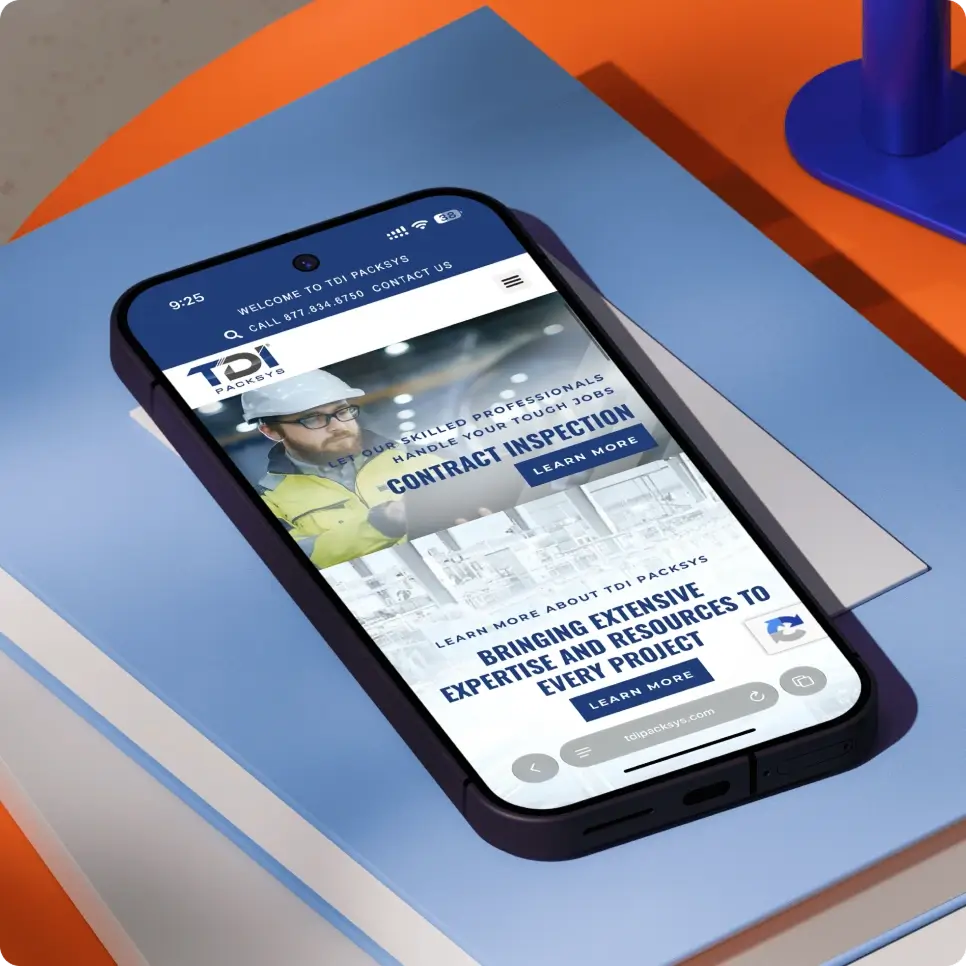
Food inspection company turns website into a lead engine (600% organic growth since 2021)

Who we’re for

We’ve learned we do our best work for companies with these characteristics. Creative work that performs requires pushback, so we’ll question the brief, challenge the approach, and tell you when a piece isn’t earning its place. That’s not about being difficult, it’s about making sure nothing leaves with our name on it that doesn’t move your business forward.

We’re ideal for

  • Companies producing enough materials that freelancer management has become its own job
  • Businesses where sales collateral directly influences close rates and deal size
  • Teams that want creative work tied to pushing business objectives forward, not just visual polish
  • Companies ready for an ongoing creative partnership rather than one-off vendor transactions
  • Leaders who want a team that learns the business deeply enough to be proactive

We’re not ideal for

  • Need a logo or brand identity designed from scratch (that’s a different service)
  • Looking for the cheapest option regardless of strategic fit
  • Want a team that just executes what you describe without pushing back
  • Need one business card and nothing else for the foreseeable future
  • Internal teams aren’t willing to provide content or feedback on drafts

Transparent pricing

Investment

$1.5K – $12K 

Per deliverable

  • One-sheets from $1.5K
  • Sales decks from $6K
  • Trade show packages from $5K

Timeline

1 – 4 weeks

Most deliverables

  • Framework-led work moves faster than custom
  • Review cycles affect total turnaround
  • Current workload affects scheduling

Payment

Milestone-based

Percentage schedule

  • 50% to start
  • 25% at midpoint
  • 25% on delivery

No surprises, no hidden fees.

What drives investment

  • Approach. Framework-led or custom. The choice you make before the project starts is the biggest factor in cost and timeline.
  • Complexity. A one-sheet distilling a single service is different from a 30-slide pitch deck with custom data visualization. More content, more narrative structure, more design complexity mean more hours.
  • Volume. Producing a suite of five coordinated one-sheets is more efficient per piece than producing five unrelated one-offs. We pass that efficiency through in pricing.
  • Brand readiness. If guidelines exist and are current, projects start faster. If the brand system needs interpretation or gap-filling before execution begins, that adds time.
  • Revision scope. Two rounds of focused feedback cost less than open-ended iteration. We’re clear about what’s included and what triggers additional hours.

Frequently asked questions

Common questions about creative services engagements, billing structures, and how working
with an ongoing creative partner differs from hiring freelancers.

We use two billing models depending on the project. Defined scope gets fixed-price: a specific sales deck or brochure with known content gets a quote up front based on our experience with similar deliverables. Collaborative or recurring work, where scope varies month to month, gets billed hourly so you can scale up before a trade show and scale back during a slow quarter. Either way, you know what you’re paying and why before the work starts.

No. Guidelines make projects faster and more consistent from day one, but we work with companies at every stage. Comprehensive brand book? Great. A logo, some colors, and a general sense of who you are? We can work with that. Nothing formal at all? We can establish working standards as we go and formalize them later if it makes sense. If you do have existing guidelines, we work within them. If we notice gaps or inconsistencies, we’ll flag them. Sometimes the best first project is a quick guidelines audit before producing materials at volume. But we’d rather help you produce great work now than tell you to come back after a branding engagement.

Updates and revisions get billed hourly, since scope varies. For template systems, your team handles routine updates without our help. For design-level changes, we handle it. Most updates for established clients are quick because we already have the files and the context.

Framework-led work uses proven structures. A services one-sheet, a case study, a template system. The container is standardized but the content is 100% yours. It’s faster, more cost-effective, and the right choice for most collateral. Custom work is exploration-led. The structure emerges from the content rather than containing it. A pitch deck for a complex deal, a campaign concept, a trade show presence that needs to differentiate. It costs more because there are more iterations and decision points. We recommend the approach before we start so there are no surprises.

It depends on what “fast” means and what we’re currently producing. Ongoing clients get prioritized scheduling because we already know the brand. A rush one-sheet for an existing client might be a few days. A rush sales deck for a new client is a different conversation. We’re honest about what’s realistic rather than promising timelines we can’t deliver.

Absolutely. Most ongoing creative partnerships start with a single deliverable. You see the work quality, experience the process, and decide if the relationship makes sense for broader needs. No long-term commitment required upfront.

A freelancer is a pair of hands. They design what you describe. We start by understanding what the piece needs to accomplish for your business, then design accordingly. You get an account manager who carries the full context of your business objectives across every project, strategists who get involved when the work calls for it, and designers who push to make every piece as strong as it can be. The bigger difference is continuity. Freelancers start from scratch every project. We build institutional knowledge about your brand, your audience, and your sales process. Ideally, we’re the same team that built your website and helped define your positioning in the first place. Doesn’t have to be that way, but when it is, everything moves faster because we’re not guessing about context.

Less than you’d spend coordinating with outside vendors. For most projects: a kickoff conversation to align on goals and content, one or two review rounds, and final approval. As the relationship develops, the briefing process gets shorter because we already know the brand context. Your heaviest time investment is providing content and feedback, not explaining who you are.

Illustration of a person writing notes while holding a phone beside a calculator and desk items

Ready to stop re-explaining your brand?

Maybe you need a sales deck by next month. Maybe you need a full collateral system before the next trade show season. Maybe you’re just tired of managing freelancers who disappear and materials that don’t match.

We’ll talk through what you need, what the brand foundation looks like, and whether we’re the right fit. If you need brand work first, we’ll tell you. If a freelancer can handle it, we’ll tell you that too.

Houston-based, serving clients nationally.